
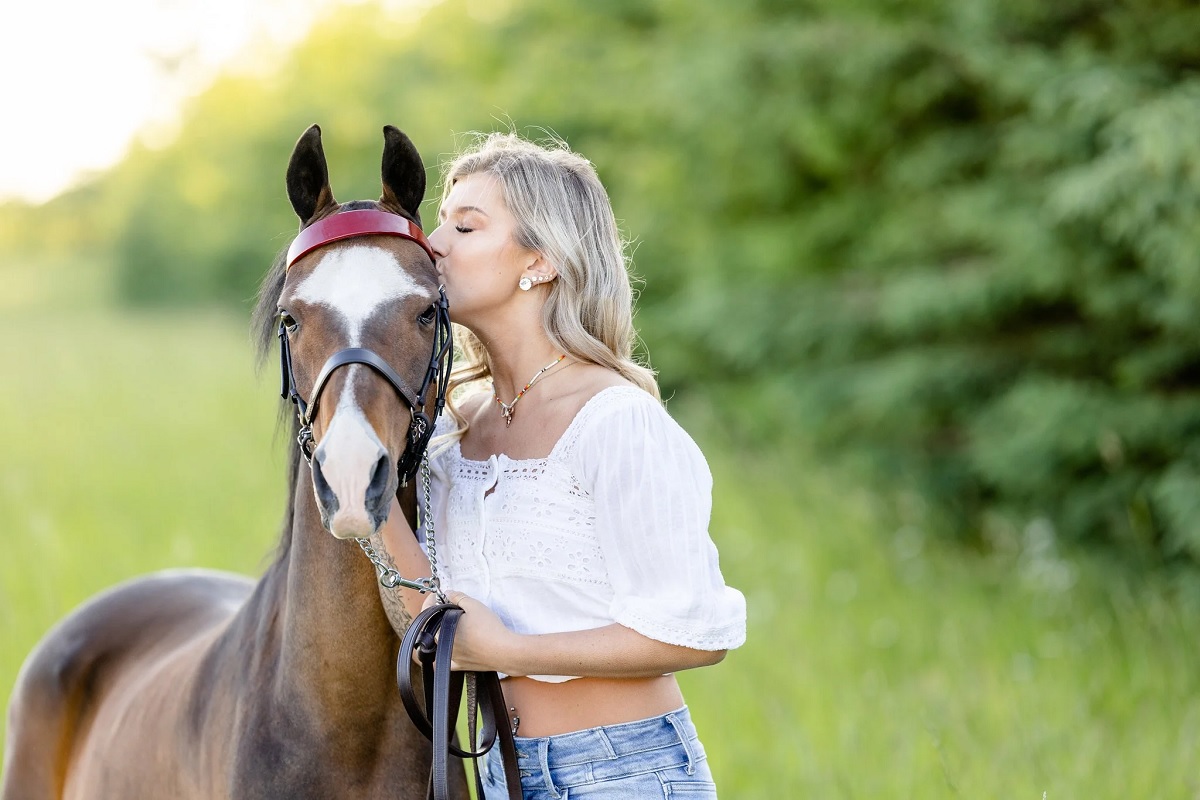

There is a specific kind of silence that exists between a horse and its rider—a quiet language spoken through the shift of weight, the slight pressure of a rein, and a shared breath. For thousands of years, this partnership has defined human history, from the battlefields of antiquity to the modern arenas of dressage and the dusty trails of the backcountry. Today, this bond is being preserved in a way that goes far beyond the grainy snapshots of the past. The art of horse and rider portraits has emerged as a profound medium for storytelling, capturing not just a sport but a soul-deep connection.
In an age of fleeting digital moments, commissioning a professional portrait with an equine partner is an act of preservation. It is about stopping time to honor a creature that asks for nothing but trust and offers total devotion in return.
The Alchemy of Connection: Why We Document the Bond
At its core, equestrianism is a journey of vulnerability. A horse is a powerful, sentient being that chooses to cooperate with a human. When a photographer steps into the paddock or the arena, their goal isn’t just to document the anatomy of the animal or the attire of the rider; it is to capture the “alchemy” between the two.
High-quality horse and rider portraits aim to reveal the nuances of the relationship. It might be the way a mare rests her head on her owner’s shoulder, or the focused, rhythmic synchronicity of a horse and rider in mid-stride. These images serve as a visual legacy. Horses, unfortunately, have shorter lifespans than their human counterparts, and these portraits often become the most cherished heirlooms an equestrian can own—a permanent window back to a season of shared life.
Beyond the Pose: The Narrative of the Lens
The most compelling portraits are rarely the ones where everyone is looking directly at the camera with a stiff smile. Instead, the “magic” usually happens in the transitions. It’s the candid moment when a rider is brushing a forelock out of a horse’s eyes, or the shared laugh after a clumsy moment.
A skilled storyteller understands that the horse is not a prop; it is a co-star. The photographer must be part-naturalist and part-artist, anticipating the flick of an ear or a soft whinny that signals the horse’s personality. When these elements align, the resulting image feels less like a photograph and more like a captured memory.
The Wardrobe and the Mane: Preparing for the Session
Preparation is the silent engine behind a successful photoshoot. Unlike a standard studio session, an equestrian session involves a thousand-pound animal with a mind of its own.
- Grooming and Aesthetics: For the horse, this means more than just a quick brush. Deep cleaning the coat, polishing the hooves, and ensuring the tack is spotless are essential. Many riders choose a “braided” look for formal portraits, while others prefer the wild, flowing aesthetic of a natural mane for a more “fine art” feel.
- Color Theory: Choosing an outfit requires a balance between personal style and the horse’s coat color. A bay horse looks stunning against jewel tones like emerald green or deep navy, while a grey or white horse provides a neutral canvas that can handle almost any palette.
- Texture and Movement: Flowing fabrics, like a long skirt or a lightweight scarf, can add a sense of motion and romance to an image, mimicking the fluid movement of the horse itself.
Interestingly, many equestrians are now looking toward the expertise of a family photographer to handle these sessions. While sports photographers are excellent at capturing a jump or a gallop, a professional who specializes in family dynamics often has a superior eye for the emotional undercurrents. They understand how to pose individuals to show affection and intimacy, which translates beautifully to the horse-and-human dynamic.
Lighting the Equine Landscape
In photography, light is everything, but in the world of horses, it is transformative. The “Golden Hour”—that period just after sunrise or before sunset—is the holy grail for equestrian portraits. During this time, the sun is low on the horizon, casting a warm, honey-colored glow that highlights the muscle definition of the horse and adds a soft, ethereal quality to the rider’s features.
Directional light can also be used to create “black background” portraits. These are striking, studio-style images where the horse is positioned in the doorway of a barn or stable. The light hits the horse while the interior of the barn falls into deep shadow, resulting in a dramatic, fine-art portrait that looks like an oil painting from the Renaissance.
The Horse as a Family Member
In the modern household, the line between “pet” and “family” has largely disappeared. For many, a horse is not a hobby; they are a confidant, a teacher, and a source of therapy. This is why more people are including their horses in their broader family sessions.
When a family photographer is invited to the farm, they aren’t just taking a picture of a person and an animal; they are documenting a family unit. Including children with their ponies or a couple with their retired trail horse creates a holistic view of the family’s life. It acknowledges that our lives are enriched by the animals we share them with. These sessions often result in a diverse gallery of images—some focused on the children, some on the parents, and many featuring the “four-legged” members that make the house (or the barn) a home.
Safety and Patience: The Unspoken Rules
Working with horses requires a level of patience that standard photography does not. A horse might be spooked by a reflector, or they might decide they are more interested in the grass than the camera.
A successful session is built on a foundation of safety. This means choosing locations where the horse feels secure and having a “handler” nearby to help with positioning. A calm rider leads to a calm horse. If the human is stressed about getting the “perfect” shot, the horse will pick up on that tension. The best photographers create a relaxed atmosphere where the horse can simply be a horse, and the rider can simply be themselves.
Choosing Your Visual Storyteller
If you are considering documenting your journey with your horse, look for a photographer whose portfolio resonates with your personal style. Do you want something dark and moody? Bright and airy? Dramatic and athletic?
Ask potential photographers about their experience with large animals. They don’t necessarily need to be riders themselves, but they should have a basic understanding of “horse sense”—knowing not to stand in blind spots and recognizing when an animal is becoming overstimulated.
A Love Letter in Pixels and Ink
At the end of the day, horse and rider portraits are a love letter. They are a testament to the hours spent in the saddle, the early mornings in the cold, and the silent understanding that exists between two different species.
Whether it is a young girl with her first pony or a seasoned equestrian with a lifelong partner, these images capture the essence of a bond that words often fail to describe. By merging the technical skill of a professional with the heart of a family photographer, you can create a piece of art that will hang on your walls for decades—a constant reminder of the magic that happens when we find a partner who helps us fly without wings.

Comments are closed.