
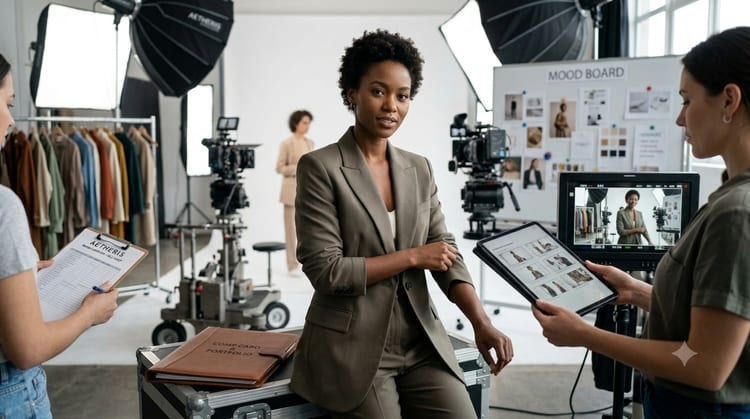

Casting a fashion campaign is one of the most high-stakes decisions a brand will make in a given season. Millions of dollars in production costs, global media buying, and projected revenue hinge entirely on the face chosen to represent a new collection. To the outside observer, the casting process might seem entirely superficial, driven solely by conventional standards of physical perfection. However, inside the casting room, traditional attractiveness is merely the baseline entry requirement.
Today, selecting a model is a complex, strategic maneuver that balances art direction, consumer psychology, and raw commerce. Creative directors, casting agents, and marketing executives are not just looking for a beautiful face; they are searching for a highly specific set of attributes that can translate a mood board into measurable sales. Understanding what happens behind those closed doors reveals exactly how the modern fashion industry operates.
Deep Alignment with Brand Identity
Every seasonal collection tells a specific story, and the model serves as the primary vessel for that narrative. A heritage luxury house launching a campaign focused on classic, bespoke tailoring will look for entirely different qualities than an emerging, avant-garde streetwear label launching a disruptive capsule collection. The most critical factor in any casting decision is seamless brand alignment.
Directors are searching for individuals who naturally embody the ethos of the company without looking like they are wearing a costume. If a brand’s core identity is built around rebellious, youthful energy, they will bypass conventionally polished models in favor of someone with an edgy, unrefined, and slightly unconventional look. Conversely, a heritage jewelry brand will prioritize classic symmetry, elegance, and a quiet confidence that does not distract from the product. The model must serve as a believable avatar for the brand’s target consumer—or, more accurately, the idealized version of who that consumer aspires to be.
The Shift from Blank Canvas to Distinct Personality
In previous decades, the industry favored models who acted as blank canvases. The goal was for the model to disappear entirely so the clothing could take center stage. While this is still somewhat true for runway shows, campaign casting has aggressively shifted in the opposite direction. Brands now want distinct personalities. They look for specific quirks—a unique gap in the teeth, striking freckles, an unusual bone structure, or a distinctive personal style—that makes the campaign memorable in an endless sea of digital advertising.
Fluidity, Movement, and Spatial Awareness
A campaign shoot is not a series of static poses; it is an exercise in kinetic energy. The ability to move fluidly and understand how garments behave in motion is a highly specialized skill that separates working professionals from amateurs. When reviewing portfolios and conducting test shoots, creative directors are deeply focused on a model’s physical vocabulary.
The Art of Silent Acting
Fashion photography requires a form of silent acting. A model must be able to instantly interpret the photographer’s directions and translate abstract concepts—such as “give me a sense of melancholic luxury” or “look like you are running late to the best party of your life”—into subtle shifts in their posture and facial expressions.
Furthermore, the model must understand the architecture of the clothing they are wearing. If a dress features an intricate pleated skirt, the model needs to instinctively know how to twist their hips or kick their leg to catch the studio fans and showcase the pleating. If they are wearing a rigidly tailored suit, they must adjust their shoulders to highlight the sharp cut of the lapel. Brands hire models who can actively elevate the garment rather than just passively wearing it.
The Influence of Social Currency and Earned Media
It is impossible to discuss modern fashion casting without addressing the overwhelming influence of social media. We have entered an era where a model’s digital footprint is scrutinized just as closely as their physical portfolio. Brands are no longer just hiring a face; they are frequently hiring a built-in audience and a micro-publisher.
When deciding between two models with similar looks and on-set capabilities, the deciding factor will almost always be their social currency. A model with a highly engaged following offers the brand immediate, direct access to a demographic that might otherwise cost thousands of dollars to reach through traditional digital advertising. However, savvy casting directors look far beyond raw follower counts. They analyze audience engagement rates, the aesthetic curation of the model’s personal feed, and the cultural relevance of their digital persona. If a model’s personal social media presence clashes with the brand’s upcoming campaign message, they will be passed over regardless of how physically striking they are.
Extreme Professionalism and On-Set Endurance
The reality of shooting a major fashion campaign is rarely glamorous. It involves grueling, fourteen-hour days, extreme weather conditions, heavy lighting equipment, and highly stressful, fast-paced environments. Time is incredibly expensive on a commercial set, with costs easily exceeding tens of thousands of dollars per hour when factoring in the photographer, lighting technicians, stylists, makeup artists, and location rentals.
Because of this intense financial pressure, a model’s professional reputation is their most valuable asset. Brands conduct quiet background checks within the industry before booking someone for a major campaign. They speak to stylists and photographers to ask one simple question: Are they easy to work with?
Casting directors look for punctuality, endurance, and a collaborative attitude. A model who arrives late, complains about standing in the cold for an autumn campaign shot in the middle of winter, or treats the production assistants poorly will be blacklisted rapidly. Brands require models who possess the stamina to deliver the same intense energy on the five-hundredth click of the camera as they did on the very first frame.
The Technical Reality: Proportions and Sample Sizes
While the industry has made significant, highly publicized strides toward body positivity and inclusive sizing over the past decade, the technical realities of sample production still heavily influence casting decisions. Months before a campaign is shot, the design team produces the physical garments. Because these pieces are often one-of-a-kind prototypes, they are cut to a strict, standardized sample size.
During the casting process, the clothing is the absolute priority. The garments must fit the model flawlessly to showcase the designer’s original vision without requiring excessive, time-consuming alterations or digital manipulation in post-production. Therefore, precise physical proportions—specifically shoulder width, torso length, and inseam measurements—remain a rigid technical requirement for many high-fashion campaigns.
However, it is important to note the stark difference between editorial campaigns and commercial e-commerce casting. While high-fashion editorials may still demand highly specific, traditional proportions, commercial brands rely heavily on relatability for conversion. Brands built around direct-to-consumer digital sales actively cast a diverse range of body types, heights, and ages because their internal data proves that consumers are far more likely to purchase a garment when they see it modeled on a body that reflects their own.
Ultimately, securing a role in a major fashion campaign is a remarkable alignment of various moving parts. The models who consistently land the most coveted contracts are those who operate as true chameleons. They understand that their job is to serve the creative vision of the brand, bringing a unique blend of physical kinetic intelligence, cultural relevance, and unshakable professionalism to every single set they walk onto.

Comments are closed.