
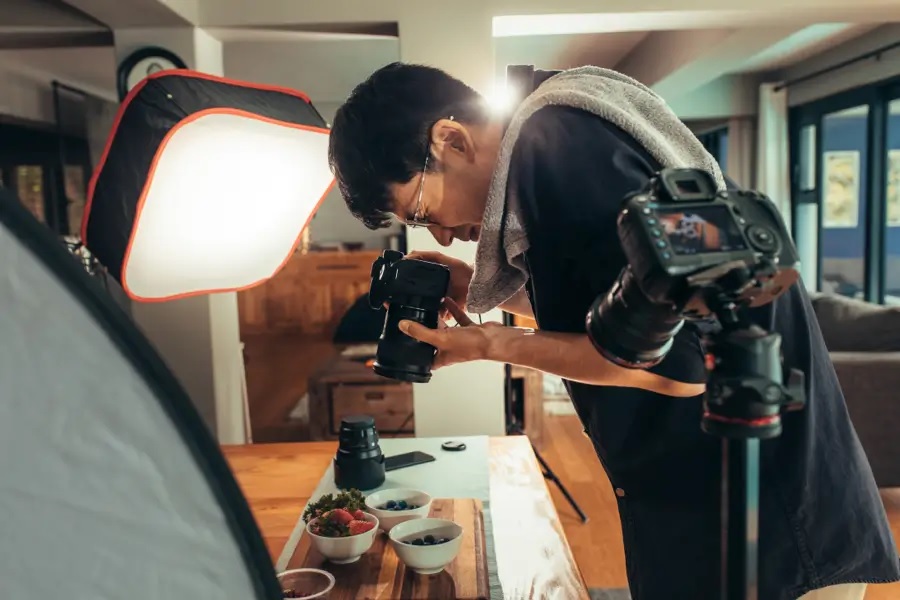

Many aspiring photographers believe that mastering their craft requires booking expensive trips to exotic destinations, purchasing top-tier camera bodies, or enrolling in elite workshops. While premium gear and breathtaking locations certainly have their place, they are not what separates a mediocre shooter from a skilled artist. True photographic mastery is forged in the ordinary moments of everyday life. It is developed through consistent, intentional practice right in your own neighborhood, backyard, and living room.
When you commit to picking up your camera every single day, photography shifts from an occasional hobby into an intuitive second nature. Technical settings stop feeling like complicated math equations and start feeling like muscle memory. More importantly, your eye begins to change. You start noticing the subtle interplay of light across a kitchen counter, the geometric shadows cast by a chain-link fence, and the fleeting expressions of people walking down the street. Let us explore the most effective, practical ways to elevate your photography skills through simple, daily habits.
The Power of Constraint and Limitation
Human psychology is wired in a way that when we have infinite choices, our creativity often stalls. If you walk out the door with a camera body, three different zoom lenses, a tripod, and a bag full of filters, you spend half your time paralyzed by options. Am I using the right focal length? Should I switch to the telephoto lens? This constant decision fatigue drains the creative energy you should be channeling into your composition.
One of the most powerful daily exercises you can practice is imposing strict physical or technical limitations on yourself.
The Single Prime Lens Challenge
If you own a zoom lens, pick one focal length—such as 35 millimeters or 50 millimeters—tape the zoom ring down so you cannot adjust it, and shoot with only that perspective for an entire week. Constraints breed creativity. When you cannot rely on zooming in to isolate a distant subject, you are forced to move your feet. You have to crouch low, step closer, or find an entirely new angle to make the composition work. This forces you to understand perspective in a profound way.
Restricting Your Color Palette
Another brilliant daily exercise is setting your camera to monochrome or challenging yourself to find and photograph only objects of a specific color during your daily walk. If today is the day of yellow, your brain tunes out every other visual distraction and locks onto the exact shade. This sharpens your observational skills, teaching you to isolate shapes, textures, and tones amidst visual noise.
Building a Five-Minute Daily Habit
The biggest obstacle to improving your photography is not a lack of talent; it is friction. Waiting for a free weekend, perfect weather, or a three-hour block of uninterrupted time means your camera spends ninety percent of its life gathering dust on a shelf.
Instead of waiting for the ideal conditions, commit to a strict five-minute daily shooting window. You do not need to leave your house. Walk into your kitchen, place a piece of fruit on the counter, and challenge yourself to take five genuinely compelling photographs of it using nothing more than the natural window light. Experiment with different angles. Move the fruit closer to the light source to create dramatic side lighting, or pull it back for a softer, more diffused look.
Consistency trumps intensity. Spending five focused minutes every single day analyzing light, adjusting exposure, and framing subjects will do far more for your technical growth than spending six hours shooting once a month. Over time, these daily micro-sessions compound, transforming your technical execution from conscious thought into instinct.
Training Your Eye to See Light Instead of Objects
Beginners make the mistake of photographing objects. Master photographers photograph light. When you look at the world, your brain automatically corrects for lighting conditions. If you stand in a shadow, your brain tells you that the concrete is gray and your friend’s shirt is blue. Your camera, however, does not possess this mental correction software; it simply records the exact photon data hitting the sensor.
To improve your daily practice, make it a habit to track light throughout your home or workplace. Notice how direct midday sun creates harsh, unflattering shadows under a person’s eyes and nose. Observe how the golden hour just before sunset wraps everything in a warm, forgiving glow that instantly elevates portraits and architectural shots alike.
Make a game out of finding light leaks, window reflections, and long morning shadows. When you stop looking at what things are and start looking at how light interacts with them, even a mundane stack of cardboard boxes in a garage can become a fascinating study in contrast and texture.
Keeping a Visual Diary
A journal is traditionally written with words, but as a photographer, your daily practice should produce a visual diary. This does not mean every photograph you take needs to be a masterpiece worthy of a gallery exhibition. In fact, giving yourself permission to take bad pictures is essential for creative growth.
Set a goal to capture one image every single day that represents your current reality. It could be your morning coffee mug next to a stack of bills, a rain droplet racing down your car window while you sit in traffic, or the way the evening streetlamp illuminates the sidewalk outside your window. The subject matter matters far less than the act of recording.
When you review your visual diary at the end of every month, you will begin to notice recurring themes, compositional habits, and technical weaknesses. You might realize that you always shoot from eye level, or that you consistently under-expose your shadows. Recognizing these patterns is the first step toward breaking bad habits and expanding your artistic range.
Analyzing Masterworks and Deconstructing Your Shots
Daily practice is not just about pressing the shutter button; it is also about active consumption and critical analysis. When you scroll through the work of photographers you admire, do not just glance at the image and hit the like button. Pause and deconstruct it.
Ask yourself specific questions about the frame. Where is the primary light source coming from? How shallow is the depth of field, and what aperture was likely used to achieve it? How does the photographer use leading lines or negative space to draw your eye directly to the subject?
By analyzing professional work and immediately applying those principles to your own daily practice, you bridge the gap between theoretical knowledge and practical execution. If you see a portrait that uses dramatic side lighting, set up a lamp in your living room that evening and try to replicate the effect with a household object or a willing family member.
Embracing Imperfection and Analytical Review
The digital age has gifted photographers with infinite storage, yet it has also bred a culture of instant deletion. If a shot is slightly blurry or poorly exposed, many people instantly wipe it from their memory card.
Instead of deleting your missteps immediately, keep an archive of your flawed images. Review them at the end of the week. Look closely at why a particular composition failed. Was the horizon crooked? Did you miss focus because your shutter speed was too slow for hand-held movement? Analyzing your failures provides the most potent education available. Photography is an empirical science wrapped in an art form; every mistake is simply data telling you how to adjust your approach for the next frame.
Transforming Routine Into Art
Mastering photography does not require a dramatic lifestyle change or a massive financial investment. It requires curiosity, discipline, and a willingness to look closely at the world around you. By imposing creative constraints, committing to short daily shooting windows, tracking light instead of objects, and keeping an honest visual diary, you will watch your technical skills and artistic vision expand exponentially.
The camera in your hands is a passport to a deeper, more observant way of living. When you practice daily, you stop sleepwalking through your routine. You begin to see the extraordinary hidden inside the ordinary, turning everyday life into a permanent gallery of meaningful, beautifully captured moments.

Comments are closed.