
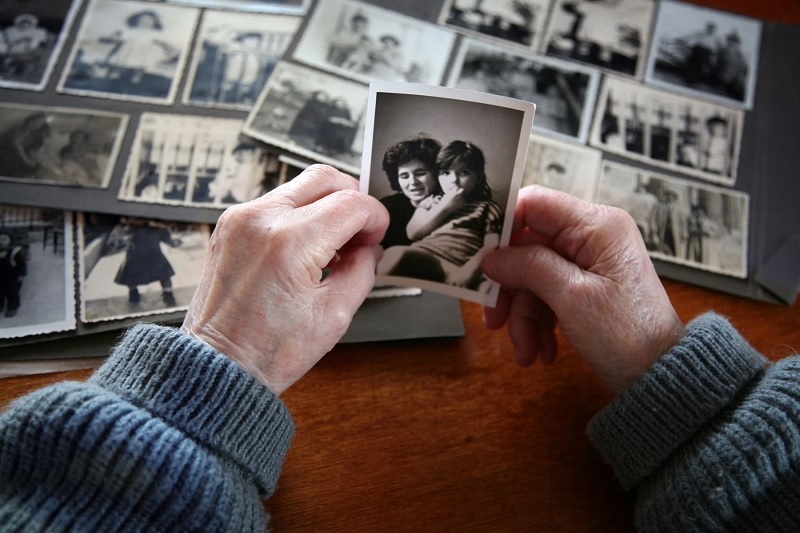

A photograph is rarely just a piece of printed paper. It is a tangible anchor to a specific moment in time, a visual inheritance that connects us to the people, places, and stories that shape our family history. Yet, as anyone who has ever opened a dusty shoebox in an attic knows, these physical memories are under constant threat. Time, environment, and the chemical composition of vintage photographic paper eventually take their toll. Faded colors, deep creases, water stains, and torn edges are the scars that older photographs bear.
Fortunately, modern technology offers a profound solution. Digital photo restoration allows us to turn back the clock on decades of degradation, rescuing images that might otherwise be lost forever. Understanding the methodology behind this process empowers you to safeguard your heritage for future generations.
Understanding the Enemies of Physical Photographs
To appreciate the value of digital restoration, one must first understand why old photos degrade. Physical media is inherently fragile and highly reactive to environmental conditions. One of the primary culprits of degradation is ultraviolet light. Prolonged exposure to sunlight breaks down the chemical dyes in color photographs, often causing the image to take on a washed-out, reddish, or magenta hue as the cyan and yellow dyes fade at a faster rate.
Humidity and temperature fluctuations are equally destructive. High moisture environments encourage the growth of mold and mildew, which feast on the gelatin emulsion of the photograph, leaving behind permanent spots and structural damage. Conversely, extremely dry environments cause the paper substrate to become brittle, leading to the cracking and flaking of the image surface. Furthermore, the very albums designed to protect these photos were often made with highly acidic paper or magnetic sticky pages that actively accelerate chemical deterioration.
The Crucial First Step: High-Quality Digitization
The success of any restoration project is entirely dependent on the quality of the initial digitization. You cannot restore data that is missing, which means capturing the highest resolution file possible is paramount. While smartphone scanning apps are convenient for quickly sharing an old picture with a relative, they rely heavily on aggressive compression algorithms and are highly susceptible to uneven lighting, glare, and lens distortion.
For true archival preservation, a dedicated flatbed scanner is the optimal tool. When scanning a photograph, resolution is measured in Dots Per Inch (DPI). A standard document can be scanned at 150 DPI, but historical photographs require a much denser pixel count. Scanning a standard print at a minimum of 600 DPI ensures that every detail of the original emulsion is captured, giving the digital editing software enough pixel data to manipulate during the restoration phase. For smaller formats, such as 35mm film negatives or slides, scanning at 1200 to 3200 DPI is necessary to blow the image up to a viewable size without losing clarity.
Handling the original physical copies during this process requires extreme care. Wearing powder-free nitrile or soft cotton gloves prevents the oils naturally present on your skin from transferring to the fragile emulsion. If a photograph is severely curled or brittle, it should never be forcefully flattened against the scanner glass, as this can instantly snap the paper and cause irreparable physical damage.
The Core Techniques of Digital Restoration
Once a high-resolution, uncompressed file is secured, the digital restoration process can begin. This is where technical proficiency meets artistic intuition. A skilled restorer does not simply apply a blanket filter over an image; they meticulously dismantle and rebuild the photograph pixel by pixel using advanced software.
Repairing Structural Damage
The most time-consuming aspect of restoration is often repairing physical defects such as tears, deep creases, spiderweb cracking, and dust spots. This is achieved using digital cloning and healing tools. The restorer samples healthy, undamaged pixels from an area immediately adjacent to a scratch and seamlessly blends them over the damaged section.
This requires a deep understanding of texture and lighting. For example, if a tear runs across a person’s patterned suit jacket, the restorer must carefully rebuild the pattern to match the fabric’s natural drape and the room’s directional lighting. When vital elements of a face or eye are missing due to a tear, the process becomes highly complex, often requiring the restorer to borrow anatomical elements from other reference photos of that same person to reconstruct their features accurately.
Correcting Tone and Contrast
Over decades, the chemical oxidation of silver halide in black-and-white photographs causes them to lose their contrast, resulting in a flat, silvery, or heavily yellowed appearance. Digital tone correction resets the image’s dynamic range. By mapping the darkest point in the image back to true black and the lightest point back to true white, the depth and dimensionality of the photograph instantly return. This process lifts the shadows and recovers details in the highlights that appeared lost to the naked eye.
Restoring and Reviving Color
For color photographs suffering from chemical fading, color correction is a delicate balancing act. Modern editing software allows a restorer to isolate specific color channels. If an image from the 1970s has shifted to a heavy magenta tone, the restorer can digitally inject the missing greens and blues back into the image to neutralize the color cast.
Additionally, the process of colorizing historical black-and-white photographs has become a highly sought-after restoration technique. This involves adding semi-transparent layers of color over the grayscale image. Accurate colorization requires historical research to ensure the correct tones are used for military uniforms, period-specific clothing, and geographical environments.
The Impact of Artificial Intelligence in Photo Restoration
The landscape of photo restoration has shifted dramatically in recent years with the integration of Artificial Intelligence. Machine learning models have been trained on millions of before-and-after images, allowing software to identify faces, recognize patterns of degradation, and automatically generate replacement pixels.
AI is particularly powerful when it comes to noise reduction and facial enhancement. Algorithms can analyze a blurry, heavily grained face in an old photograph and use generative technology to sharpen the features, rebuild missing textures, and smooth out imperfections in a matter of seconds.
However, AI must be used with a critical, editorial eye. Because artificial intelligence relies on referencing its training data to guess what missing pixels should look like, it can occasionally alter a person’s facial features so significantly that they lose their natural likeness. The goal of restoration is to return a photograph to the exact state it was in on the day it was printed, not to digitally reconstruct a historical figure into a modern, hyper-realistic, and artificial approximation of themselves. The best results always come from a hybrid approach: using AI for broad, heavy lifting like noise reduction, while relying on the human hand for delicate localized repairs and ethical aesthetic judgments.
Establishing a Long-Term Archiving Strategy
Restoring a photograph digitally is only half the battle; the final and most critical step is ensuring the new digital file survives the future. Hard drives fail, cloud companies go out of business, and digital formats become obsolete. This phenomenon, known as digital decay, is a very real threat to modern archives.
To guarantee the safety of your restored memories, strict data management is required. All final restorations should be saved in an uncompressed format, such as a TIFF file. Unlike JPEGs, which compress and discard pixel data every time they are opened and re-saved, TIFFs retain their full quality indefinitely.
Securing these files relies on the 3-2-1 backup strategy, which is the gold standard for data preservation. This rule dictates that you should have three total copies of your data, stored on two different types of media, with at least one copy kept securely off-site. In practice, this means keeping the primary files on your computer’s internal drive, an exact duplicate on an external solid-state drive stored in a fireproof safe, and a third encrypted copy uploaded to a reliable cloud storage service.
Finally, do not underestimate the power of bringing the photograph back into the physical world. Printing a restored image on high-quality archival paper using pigment-based inks creates a new physical artifact that, if stored away from direct sunlight and humidity, will easily outlast the original photograph that inspired it.
Through careful digitization, meticulous digital repair, and robust archiving, we can halt the march of time. Digital photo restoration ensures that the faces, the environments, and the silent stories of our ancestors remain vibrant and accessible, ready to be passed down and appreciated by the generations that will follow.

Comments are closed.