
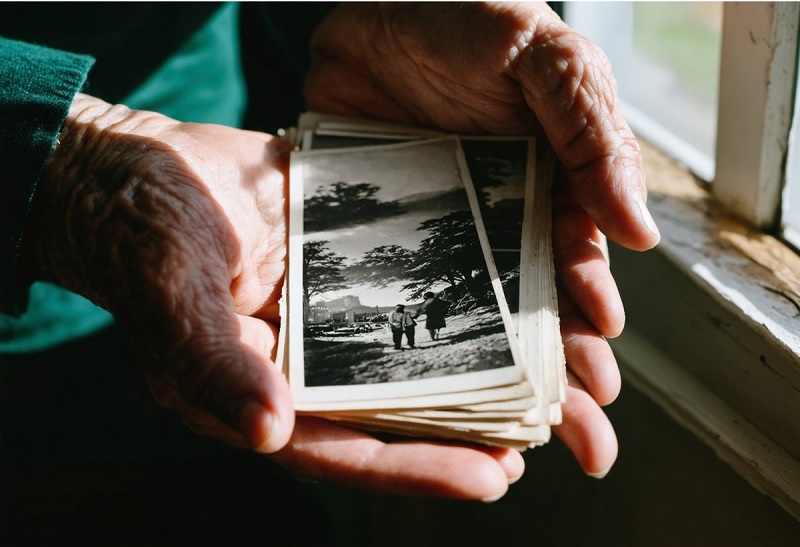

History is rarely recorded by grand declarations or sweeping political documents alone. More often than not, the true fabric of human experience is captured in quiet, unscripted moments that slip past unnoticed by the casual observer. While commercial photography seeks to glamorize and portraiture aims to flatter, documentary photography holds up an unvarnished mirror to society. It captures reality on its own terms, preserving the triumphs, struggles, and mundane beauty of everyday existence for generations to come.
Documentary photographers operate as visual historians, storytellers, and cultural archivists. Their work goes far beyond simply pointing a camera at a scene and pressing a shutter button. It requires profound patience, deep empathy, and an unwavering commitment to truth. Whether they are embedding themselves in marginalized communities, documenting rapid urban development, or chronicling the intimate rhythms of a family home, these photographers secure fleeting moments in time before they vanish forever.
The Core Philosophy of Documentary Photography
At its heart, documentary photography is driven by a singular purpose: storytelling with integrity. Unlike fashion, advertising, or studio portraiture, documentary work strictly rejects staging and artificial manipulation. The goal is never to manufacture a better narrative, but to uncover the authentic one that already exists beneath the surface.
This commitment to authenticity creates a unique ethical responsibility. Documentary photographers must navigate the delicate boundary between observing history and participating in it. They must build trust with their subjects, often spending weeks or months embedding themselves in unfamiliar environments without altering the natural flow of life. Trust is the ultimate currency of documentary work. Without it, subjects become guarded, expressions stiffen, and the resulting images lose their raw, truthful power.
Immersive Storytelling Over Single Frames
While a single striking photograph can certainly arrest our attention, documentary photography is fundamentally about the larger body of work. A lone image can hint at a story, but an extended series provides context, nuance, and emotional depth.
Documentary projects often take years to complete. Photographers immerse themselves in complex social issues, cultural shifts, or geographic transitions, returning to the same locations repeatedly. Patience becomes their greatest tool as they wait for the decisive moment when action, light, and emotion converge. This long-form approach allows viewers to move past initial visual impressions and develop a genuine understanding of the people and places depicted in the frame.
Navigating Sensitive Environments
Entering unfamiliar or vulnerable communities requires immense cultural sensitivity. Documentary photographers cannot afford to act as detached tourists passing through with expensive gear. They must approach their subjects with humility, listening to their stories before ever lifting a camera to their eye.
This respectful approach ensures that the resulting images do not exploit or caricature the subjects, but instead honor their dignity and humanity. When a photographer establishes genuine rapport, the camera practically disappears, allowing raw emotions, quiet exhaustion, and uninhibited joy to be recorded faithfully.
The Technical Craft Behind Unobtrusive Capture
Documentary photography demands technical proficiency paired with absolute discretion. Because the moments being preserved are happening in real time, there are no second takes, no studio lighting setups, and no opportunities to ask a subject to reposition themselves for better light.
Mastering Available Light and Fast Reflexes
Documentary practitioners must become absolute masters of natural and available light. Whether working in the deep shadows of an industrial factory or under the harsh fluorescent lights of a community center, they must read light instantly and adjust their exposure settings on the fly.
Anticipation matters more than reaction speed. A seasoned documentary photographer does not wait for an event to happen before taking a picture; they watch body language, micro-expressions, and spatial dynamics to predict where the action is moving a split second before it unfolds. This intuitive foresight is what separates a chaotic snapshot from a compelling historical document.
Equipment Choices for the Field
Gear selection for documentary work prioritizes reliability, speed, and discretion. Bulky camera setups and massive telephoto lenses instantly alter the energy of a room, making people self-conscious. Most documentary photographers prefer compact, lightweight mirrorless camera systems paired with fast prime lenses. These setups allow them to move quickly and blend into the background, ensuring that their subjects remain entirely focused on their own lives rather than the lens pointed at them.
Preserving Culture and Countering Amnesia
Human memory is notoriously fragile. As communities modernize, traditions fade, and urban landscapes transform overnight, entire ways of life can disappear from collective consciousness in a matter of decades. Documentary photography acts as a crucial bulwark against cultural amnesia.
By recording vanishing trades, indigenous rituals, neighborhood transformations, and shifting social norms, these photographers build an invaluable visual archive. Future generations can look back at these frames and understand not just what buildings looked like, or what clothes people wore, but how it felt to exist in a specific time and place.
Consider how historical archives shape our understanding of past eras. The Great Depression in America, for instance, is universally understood through the lens of Farm Security Administration documentary photographers who captured the grit, resilience, and quiet dignity of displaced families. Those images did not merely illustrate history; they fundamentally shaped public policy and humanized statistical data through the power of visual empathy.
The Ethical Boundaries of Truth in Visual Media
In an era dominated by digital manipulation, artificial intelligence generation, and instantaneous photo editing apps, the role of the documentary photographer is more critical and more challenging than ever before. The temptation to enhance reality, remove distracting elements, or punch up colors in post-processing has never been greater.
However, the foundational rule of documentary photography remains absolute: truth is non-negotiable. Cropping for composition is standard practice, but altering the fundamental content of a scene—such as adding elements, removing objects, or misrepresenting the context of a caption—violates the core integrity of the medium. Viewers place an implicit trust in documentary images, believing that what they see actually happened in front of the lens. Maintaining that trust is the single most important duty a documentary photographer carries.
The Enduring Value of Real-Life Archives
Documentary photography reminds us that our shared human experience is profoundly complex, messy, and beautiful. It challenges us to look beyond our immediate bubbles and witness the realities of lives vastly different from our own.
By committing time, emotional energy, and technical skill to preserving unscripted moments, documentary photographers do more than create art. They curate the historical record of our time. Their work ensures that the struggles of the working class, the quiet warmth of family traditions, the resilience of communities facing crisis, and the simple, passing poetry of daily life are never lost to time.

Comments are closed.